
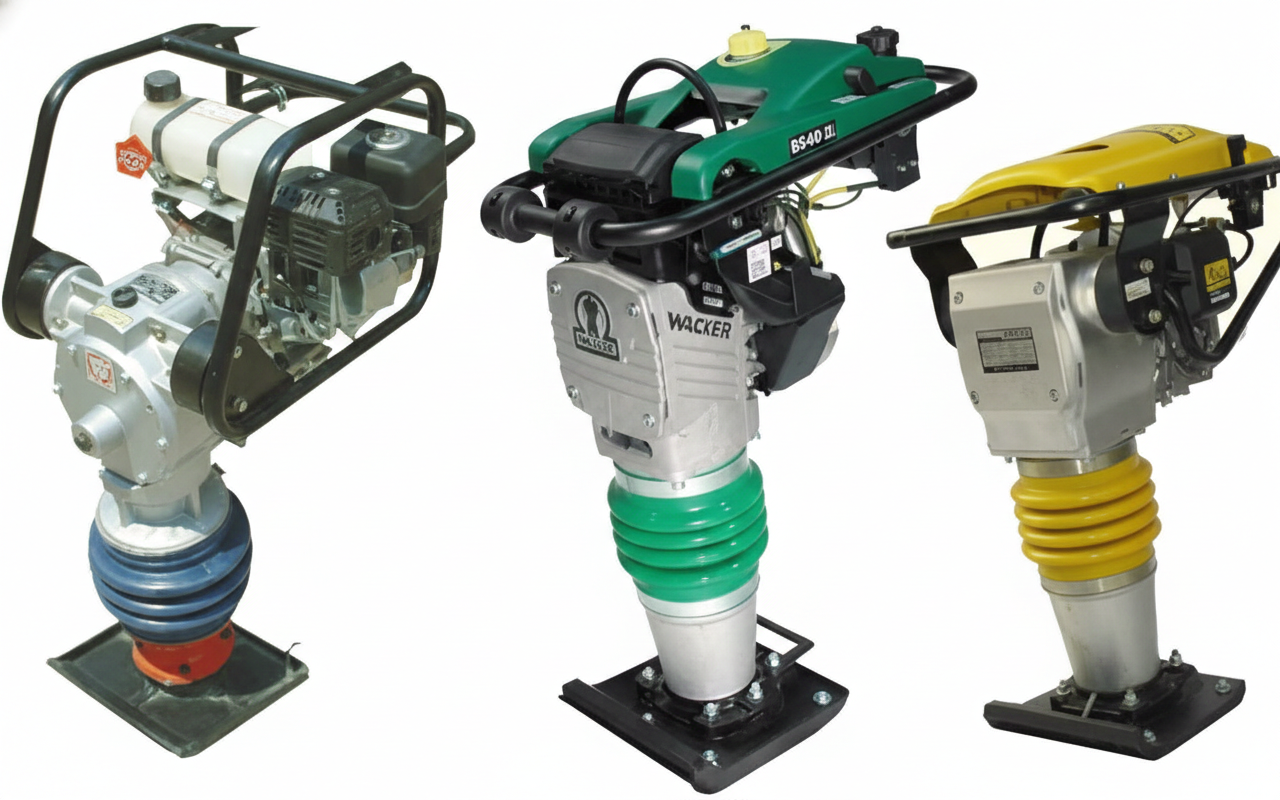
 I’ve been compacting soil for over 20 years, and I’ve watched the technology evolve from those clunky, ancient "frog-style" tampers we used back in the 60s and 70s to the sleek vibratory rammers we rely on today. While plate compactors have their place, nothing beats a "jumping jack" (tamping rammer) for cohesive soil in a trench.
Recently, I’ve been looking at the current market landscape—comparing the big-name imports, the cheap knock-offs, and the high-spec alternatives. Here is my breakdown of what actually matters when you're looking to buy a rammer, based on technical specs and real job site realities.
The Tech That Matters: What’s Under the Hood? A rammer isn't just an engine on a stick. It’s a high-frequency vibration machine. In my experience, three things determine if a machine lasts 5 years or 5 weeks:
-
The Engine: You cannot just slap a standard lawnmower engine on a rammer. The vibration will rattle it to death. You need a dedicated, commercial-grade 4-stroke engine designed with high vibration resistance. If the manufacturer used a generic motor, stay away.
-
The Springs: This is the heart of the impact. Cheap units use a single spring made of standard steel. They fatigue and snap. I always look for a dual-spring system made from high-fatigue manganese steel. It delivers a harder hit and lasts longer.
-
Dynamic Balance: A well-designed rammer should almost "walk" itself. If the dynamic balance is off (common in cheap units), you end up fighting the machine to keep it upright. That leads to operator fatigue and sloppy compaction.
Electric vs. Gas: The Showdown
-
Electric Rammers: I’ve tested these, and they have their niche—mostly indoors where fumes are a no-go. They are quiet and cheap to buy. But honestly? They are a hassle on a real site. You’re tethered by a cable (trip hazard), and they lack punch. Most electrics only deliver about 500 blows/minute and an impact force of roughly 0.8 tons (1,760 lbs). It takes forever to get proper compaction density.
-
Gasoline (Internal Combustion) Rammers: This is the industry standard. No cables, total mobility. They hit harder—usually around 1.8 tons (approx. 3,900 lbs) of force—and faster, at 650 blows/minute. For trench work, this is what you want.
Market Reality: The "Goldilocks" Solution So, what should you buy? The market generally offers three tiers:
-
The "Big Name" Imports: You know the brands—German and Japanese giants. They are excellent machines, but they cost a fortune (often $2,500 - $3,000+). Plus, I've run into issues getting parts for older models, especially 2-strokes that have been phased out due to emissions regs.
-
The "Cheap" Generics: These are the sub-$800 units you find online. They use generic engines and single springs. They vibrate your hands numb, are hard to start, and usually die within a season. Avoid them.
-
The High-Spec Alternatives (My Recommendation): There is a tier of equipment that sits right in the middle—let's call them "Premium Domestic" units. I recently reviewed a series that hits the sweet spot. They use the same top-tier commercial engines as the big brands (solving the reliability issue) and use dual-spring manganese steel systems (solving the durability issue).
The balance is dialled in so well that on flat ground, you can almost let go of the handle and it stays upright. Best of all, they cost about half to two-thirds of the big-name imports while offering easier access to parts.
The Bottom Line Don't waste money on a cheap electric unit for serious dirt work, and don't feel like you have to spend top dollar on a famous logo to get a good finish. Look for a gas-powered unit with a proven commercial engine and a dual-spring boot. That’s where the real value is.


