

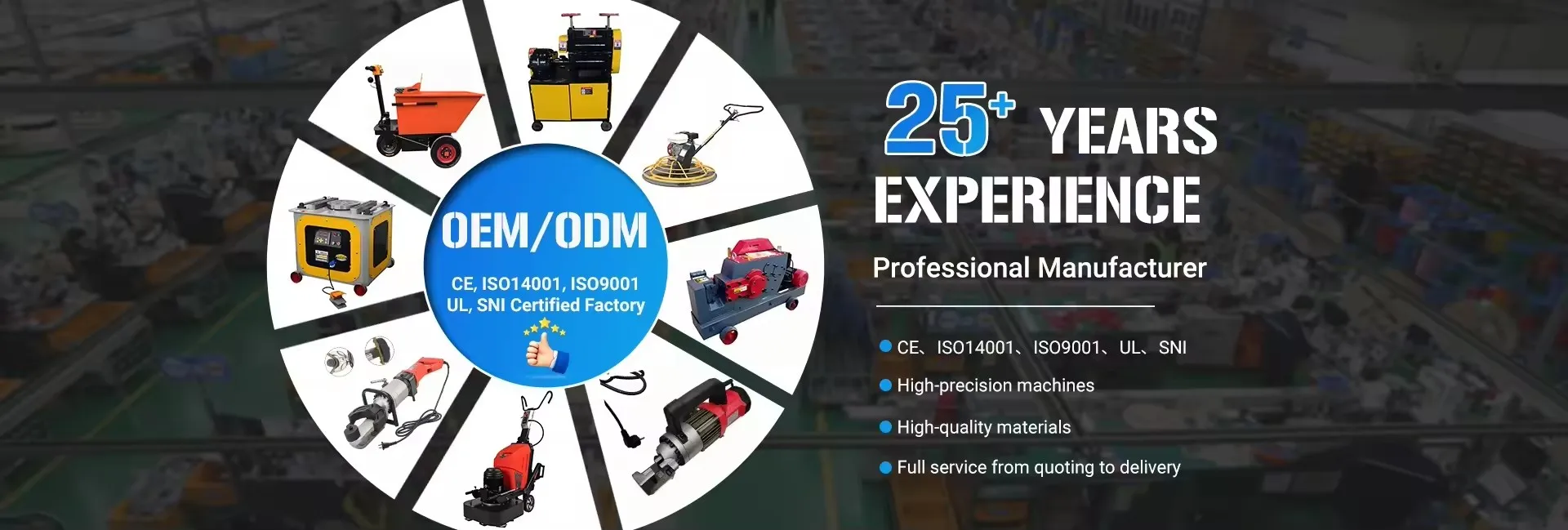

An electric rebar cutter is a heavy, stationary piece of equipment—often weighing upwards of 400kg (approx. 880 lbs). You don't move it to the steel; you bring the steel to it. Therefore, how you set up your fabrication yard dictates your daily profit margin.
When I set up a cutting station, I place the cutter centrally. On the infeed side, I set up a heavy-duty roller conveyor table. Rebar comes in 6-meter to 12-meter (approx. 20 to 40-foot) bundles. Expecting a worker to manually drag a 12-meter piece of heavy iron across the dirt and hold it level in the jaws of the cutter is a recipe for a blown-out lower back and wildly inaccurate cuts.
With a roller table, the operator can slide the bar with one hand. On the outfeed side, I set up a steel backstop or a measuring jig. The operator slides the bar until it hits the pre-measured stop, steps on the foot pedal, and the sheared piece drops directly into a sorting bin. This setup transforms the chaotic, exhausting process of manual cutting into a smooth, ergonomic assembly line. You protect your workers from fatigue, and you double your output.


